How do heat pumps perform in winter?
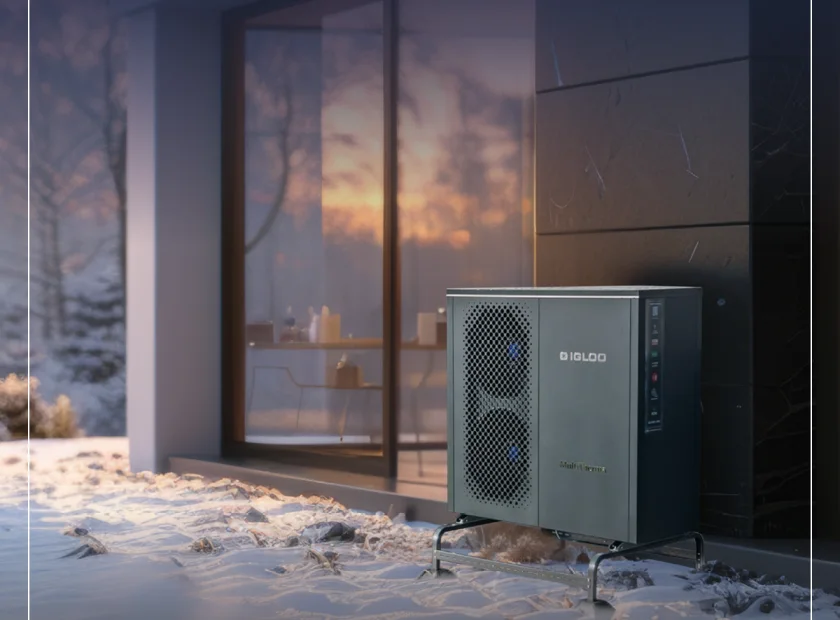
Heat pumps are growing in popularity as an eco-friendly and efficient heating solution. But can they deliver adequate performance during frosty winters? The answer is: yes — provided they are correctly sized and installed. Below we show how MultiTherma copes with extreme conditions and why efficiency across the whole season is key.
Does the unit maintain high heating output during frosts?
Yes — MultiTherma heat pumps provide the required heating output for every building, regardless of whether it is poorly or well insulated. Poor insulation does not rule out a heat pump — an IGLOO-made pump can cover the full heat demand of such a building too. A lack of insulation only means the required output will be higher than for an insulated building. With skilful sizing, there is nothing to stop the pump working without support from gas boilers or electric heaters.
MultiTherma is one of the few that can work efficiently at an ambient temperature of –25 °C and below, producing heating water of up to 70 °C — enough to heat most buildings, including those with older, high-temperature radiators. The key is skilful sizing based on building physics and the pump’s performance characteristics. Choosing a pump whose output is not confirmed by tests (despite marks such as HP Keymark or Eurovent) causes operating problems and high electricity use. Choosing a pump with high, real efficiency translates into trouble-free operation and low costs — regardless of the conditions outside.
Which technologies enable efficient operation at low temperatures?
The pump is designed with the lowest possible running costs across the whole season in mind. Contrary to appearances, very low outdoor temperatures are not the key factor — what matters is efficiency weighted by how often a given temperature occurs. Maximum demand at the design –20 °C (zone III) occurs for only about 4 hours a year (Kraków–Balice station), and temperatures below –15 °C for about 26 hours. That is why efficiency across the most frequent temperatures determines the real heating costs.
← Back to news