The role of heat pumps in modernising older buildings
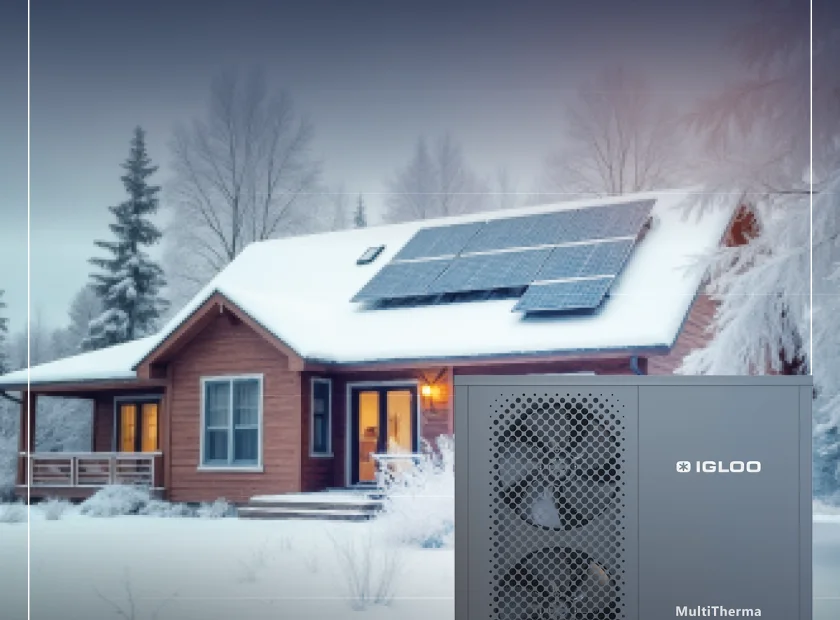
What role can MultiTherma pumps play in modernising older buildings?
IGLOO heat pumps fit perfectly into decarbonising older buildings too — they suit both new buildings and those undergoing thermal modernisation. A wide range of outdoor units and the option of cascading make it possible to provide the required output even for large buildings without full insulation. Producing heating water at temperatures of up to 75 °C and a declared minimum operating temperature of –25 °C allow effective operation in any conditions.
Some of the highest COP and SCOP values, together with compressor capacity control down to 10% of rated output allow it to match the heating system’s variable load, which occurs for nearly 99% of the year. After applying high-grade insulation — even after the pump has been installed — efficiency rises with no risk of oversizing, which is a weakness of older designs with compressor control down to only 50% of output.
Correct pump sizing, analysis of its characteristics and knowledge of the building’s thermal profile are key to efficient operation. Features such as weather compensation of the heating-water temperature and operating schedules, well set at start-up, have a decisive impact on running costs — an often overlooked but most crucial matter.
Given the high investment costs of ground-source heat pumps and the rising average air temperature during the heating season, an air-source heat pump can be an effective tool for the energy transition of older buildings — with ever-lower running costs. Especially in the context of rising gas costs and charges related to ETS2 (2027–2028) and their even greater impact on the cost of gas energy from 2030.
What savings can be achieved in older buildings?
Contrary to appearances, running costs for buildings that need a higher flow temperature need not be very high — very low outdoor temperatures occur rarely. The multi-year average heating-season temperature hovers around 0 to +1 °C, and extreme –20 °C occurs for only a few hours a season. Temperatures are now higher, and new draft regulations assume design outdoor temperatures about 3–5 °C higher. With about 3,000 hours of pump operation per season, efficiency at that extreme, rare point has negligible importance for total costs.
← Back to news